Skip to content
Paper Play

Geometry & modular

Pythagoras by folding

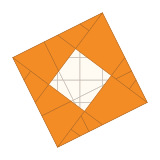
Crease the paper into thirds, fold in the four corners, and the famous rule of right triangles, a² + b² = c², appears in front of you.

  • DifficultyIntermediate
  • PaperSquare, 15 × 15 cm
  • Steps7
  • About8 min

Why this level: Thirds both ways with Haga’s fold, then four corners folded exactly on the lines between the marks.

You need: 1 sheet of origami paper

Preview Preview: checked on screen; real-paper verification is in progress.

Start folding

Story

The rule a² + b² = c² for right triangles is named after the Greek thinker Pythagoras, born around 570 BC, but people knew it long before him. In China it is called the gougu theorem, and the old book Zhoubi Suanjing explains it with a picture made of squares. Showing it by folding is old too: a 1939 handicraft book from Buenos Aires, Argentina, creases a square into nine small squares and shows that the square on the long side is 5 of them — 4 + 1.

Did you know? A Babylonian clay tablet called Plimpton 322, written around 1800 BC, lists 15 sets of numbers that fit this rule — more than a thousand years before Pythagoras was born.
Learn more (external sources)

Steps at a glance

  1. 1. Two centre lines

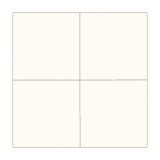
    White side up. Fold in half side to side and unfold, then bottom to top and unfold, to mark the middle of every edge.

  2. 2. Find a third (Haga’s fold)

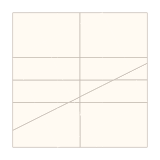
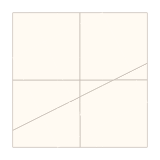
    Fold the bottom-right corner to the middle of the top edge. Pinch where the folded bottom edge crosses the left edge — one third of the way up — and unfold.

  3. 3. Thirds across

    Fold the bottom part up along a level line through the mark and unfold. Fold the top edge down to that crease and unfold: three equal bands.

  4. 4. Another third

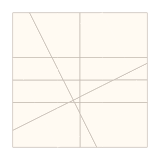
    Now fold the bottom-left corner to the middle of the right edge. Pinch where the folded left edge crosses the top edge — one third from the left — and unfold.

  5. 5. Thirds down

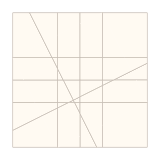
    Fold the left part over along an upright line through the mark and unfold. Fold the right edge to that crease and unfold. The paper is now 9 small squares.

  6. 6. The first right triangle

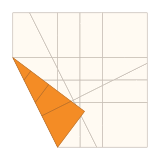
    Fold the bottom-left corner over along the line joining the upper mark on the left edge (one third down) to the left mark on the bottom edge (one third along).

  7. 7. The other three corners

    Go round the square the same way and fold the other corners. Each crease runs from the one-third mark on one edge to the one-third mark on the next. The four triangles cover the tilted square without overlapping and leave a small white square window in the middle.

Settings

Clear saved data